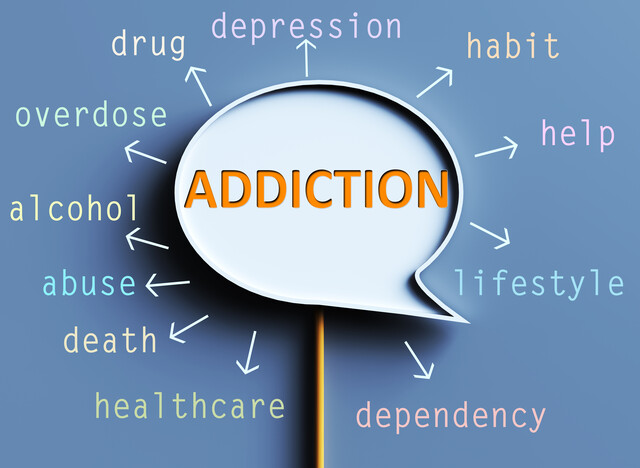
I’ve decided to turn this blog into more of a recovery blog—not necessarily focused solely on drinking, but also serving as a journal of sorts, where I can share personal experiences, thoughts, and opinions as I navigate life and recovery.
Opinions are like assholes; we all have them. So feel free to follow along and comment on any of the topics I discuss. I genuinely enjoy hearing other people’s perspectives, even when they differ from my own.
Earlier this week, I hit 200 days of sobriety from alcohol. As much as I felt accomplished, I also felt a little defeated. Why? Because I know I’ve still been indulging in THC drinks on occasion.
Will I ever be sober from both?
Part of me still misses that sense of celebration and fun that drinking seemed to offer—the illusion that alcohol somehow made everything more exciting. Yet the pull is still there, even after more than six months without it.
And the messed-up part? I don’t even enjoy the THC drinks.
They make me feel tired, foggy, and anything but present with my children. I only indulge when I’m home in my safe place and my husband is drinking, almost as if I need something of my own to feel included in the fun.
Is it weak of me to admit that I still feel left out? That I sometimes feel like I’m missing something by not drinking? Shouldn’t this be easier by now, especially after crossing the six-month mark?
You’d think so, right?
But maybe recovery doesn’t work that way. Maybe the passage of time doesn’t automatically erase the desire to feel included, escape reality, or experience that familiar sense of release. Maybe those feelings are exactly what I need to start paying attention to.
And then there’s another bulldozer rearing its ugly head: bulimia.
Since quitting drinking, I’ve found myself handling stress in, dare I say, even worse ways. When something stressful happens, I’ll sometimes reach for a THC drink. When I tried cutting back on those, I found myself turning to food to cope instead.
WTF?
I know that continuing therapy and working on healthier habits will ultimately help in the long run. God knows I need to figure out better ways to manage stress because life isn’t exactly going to stop throwing curveballs at me anytime soon.
But this has made me question something I hadn’t fully considered before: What if I haven’t necessarily eliminated the problem, but simply changed the way I cope with it?
For a long time, I viewed addiction as being temporarily tied to a particular vice. In my case, that vice was alcohol. I think I assumed that if I could just stop drinking, I could move on and leave the problem behind.
But addiction is more complicated than that.
We often assume that once someone enters treatment or stops engaging in an addictive behavior, they should eventually be “cured” of their compulsions. The reality is that recovery isn’t always that straightforward. One behavior can sometimes be replaced by another, a pattern commonly referred to as addiction replacement or cross-addiction.
According to Addiction Center, addiction replacement occurs when a new addictive behavior takes the place of a previous one, potentially serving a similar purpose or providing a comparable sense of relief or reward.
Sometimes, it isn’t necessarily the substance or behavior itself that we’re chasing. It’s what we hope it will do for us. Maybe we want to quiet our minds, escape uncomfortable feelings, relieve anxiety, or simply get a break from the stress of everyday life.
And when we remove one coping mechanism without addressing what drove us toward it in the first place, we may find ourselves reaching for something else.
The possibilities are numerous. For some people, these patterns may involve disordered eating, substance use, gambling, overworking, compulsive exercise, nicotine, shopping, or other behaviors that become difficult to control. Not every habit or coping mechanism is an addiction, of course, but the underlying pattern is worth recognizing when a behavior starts interfering with our health, relationships, or daily lives.
So, how do we stop the cycle?
It starts with looking beyond the behavior itself and examining what’s happening underneath it. Therapy can help us identify unresolved emotions, understand our triggers, and develop healthier ways to manage stress instead of automatically turning to a substance or behavior for relief.
Education and support matter, too. Learning about the possibility of replacing one compulsive behavior with another can help people recognize warning signs earlier. Working with a therapist, counselor, or recovery support group can also help us identify familiar thought patterns and develop strategies for responding differently when those triggers show up.
And that brings me back to where I am right now.
I’m starting to recognize my triggers. That’s progress, even if it doesn’t always feel like it. Now comes the harder part: working with someone to find healthier ways to cope, learning to sit with uncomfortable feelings, and being patient with myself along the way.
I want to be present with my children. I want to enjoy life without feeling like I need a substance to make it more fun. I want to handle stress without feeling compelled to replace one coping mechanism with another.
And I want to give myself permission to be a work in progress.
Hitting 200 days without alcohol is something to be proud of. The fact that I’m questioning my other habits doesn’t erase that accomplishment. If anything, it shows me that recovery requires more than simply removing alcohol from the equation.
Maybe the goal isn’t just to stop drinking or stop reaching for something else. Maybe it’s to understand why I keep reaching in the first place.
I’m still figuring that out. I have a lot of work to do, and I know there will be uncomfortable conversations, difficult days, and moments when I question myself.
But at least I’m starting to connect the dots.
And for now, I think that’s enough.
To be continued…
Leave a Reply